

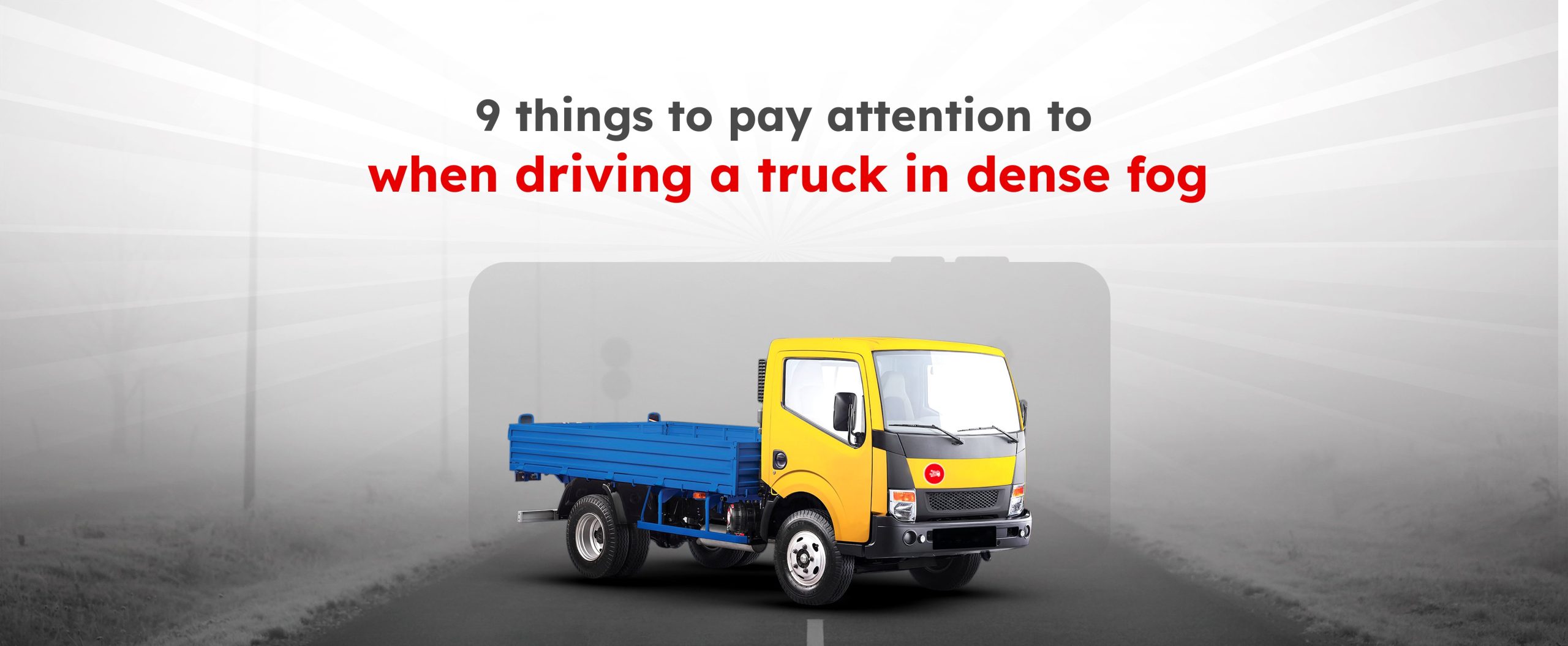
To drive a truck safely in dense fog, slow down before you enter the fog and drive well below the legal limit, keep a much longer gap to the vehicle ahead, use low beams and fog lamps instead of high beam, stay in your lane and watch the road edge, and keep your windscreen, mirrors and lights clean. If visibility drops so low that you cannot see the road ahead, pull well off the road at a safe place, switch on your hazard lights and wait. Fog season in Bangladesh runs mainly through December and January. In the early hours of 2 January 2026, three fog crashes involving trucks, covered vans and a bus on the Dhaka-Mawa Expressway injured at least 20 people.
Here are the nine things to pay attention to, with the rules and figures behind them.
Why fog is so dangerous for truck drivers
A truck is heavy, tall and slow to stop. In clear weather, a loaded truck at 50 km/h needs roughly 60 m to come to a stop once the driver reacts. In dense fog, the driver may only see 20 or 30 m ahead, so a stalled truck, a rickshaw van or a crash appears with no time to brake.
The danger runs both ways. Other drivers cannot see a truck either, especially from behind, and a truck that has stopped on the carriageway in fog is a common cause of multi-vehicle pile-ups. In Bangladesh, fog crashes cluster in the early morning hours, when fog is thickest and drivers who have been on the road all night are most tired.
Fog also closes routes. On 26 December 2025, dense fog stopped ferries on the Paturia-Daulatdia and Aricha-Kazirhat routes for nearly 15 hours, and hundreds of vehicles, including goods-laden trucks, waited at the terminals, with the Paturia queue stretching three to four kilometres onto the highway, UNB reported.
1. Slow down before you enter the fog
Speed is the single biggest factor. The Fire Service blamed the January 2026 Dhaka-Mawa crashes on “lack of driver caution, dense fog and high vehicle speeds”, Jago News reported.
Trucks already have lower limits than other vehicles. Under the Motor Vehicle Speed Limit Guideline 2024, trucks are limited to 50 km/h on expressways and Category A national highways, 45 km/h on Category B highways and district roads and 30 km/h in towns, The Daily Star reported. Those are limits for clear weather. In fog, drive at a speed that lets you stop within the distance you can see. If you can see 30 m, that may mean 20 km/h or less.
Slow down before you reach a fog bank, not inside it, and check the speedometer often. Fog makes speed hard to judge, because there is little passing scenery to tell you how fast you are going.
2. Keep a much longer following distance
In clear weather, a safe gap for a truck is about one second for every 3 m of vehicle length, plus one more second above about 64 km/h, according to the Wyoming CDL Manual. For a 10 to 12 m truck, that is about four seconds. In fog, double it.
Do not follow the tail lights of the vehicle ahead closely to find your way. It feels safer, but if that vehicle stops suddenly, you will hit it. Leave enough space to stop without swerving.
3. Use low beams and fog lamps, not high beam
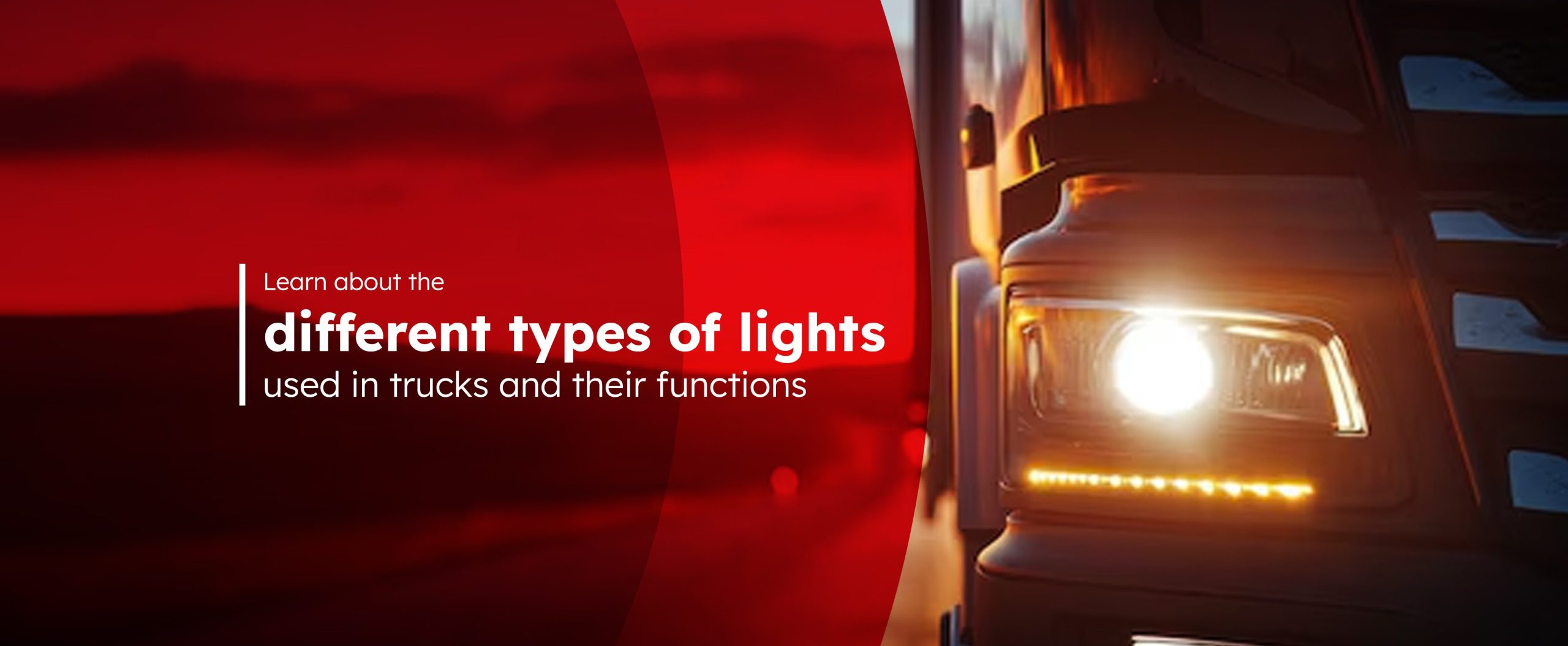
High beam reflects off fog and makes it harder to see. Use low beam, and switch on front and rear fog lamps when visibility is seriously reduced. The UK Highway Code, a widely used reference, says fog lights should be used only when visibility is “seriously reduced” and switched off when it improves, so they do not dazzle others (UK Highway Code). Many trucks in Bangladesh have no rear fog lamp, which makes clean tail lights and reflectors even more important. How each truck light is meant to be used, from fog lamps to clearance lights, matters most on a foggy night.
The US commercial driving manual also advises switching on the hazard flashers while driving slowly in fog. Use them if your speed is far below other traffic, but do not rely on them in place of proper lights.
4. Stay in your lane and watch the road edge
Fog hides lane markings, dividers and the road edge. Keep to your lane, avoid overtaking, and do not change lanes unless you must. Use the left edge line, reflective road studs or the divider as a guide. On roads with no markings, slow down further, because a soft verge or a parked vehicle on the shoulder can appear suddenly.
Never stop in a traffic lane in fog unless you have no choice. If you have to leave the road, pull as far off as you can.
5. Keep the windscreen, mirrors and lights clean
Fog leaves a film of moisture on glass, and the inside of the windscreen fogs up when the cab is warmer than the air outside. Before setting off and at every stop:
- wipe the windscreen inside and out, and check that the wipers clear it properly;
- use the demister, or open a window slightly, to keep the inside clear;
- clean side mirrors so you can see vehicles behind;
- wipe the headlights, fog lamps, tail lights and reflectors.
A dirty headlight in fog can throw much of its light in the wrong direction. A daily walk-around check that includes wipers and lights takes a few minutes and is worth it every morning in winter.
6. Listen as well as look
In thick fog, your ears can warn you before your eyes. Turn the music off, lower the window slightly at junctions and listen for horns, engines and people. Use your horn briefly at blind junctions and when approaching people or vehicles you cannot see clearly, but do not use it constantly, which only makes it harder for others to hear.
7. Take turns and junctions slowly
Turning across traffic in fog is risky, because oncoming vehicles appear late and cannot see you until they are close. Slow down well before a turn, signal early, and make sure the road is clear before you commit. A long truck takes longer to clear a junction than a car, so allow extra time. At unlit junctions, pause and listen before pulling out.
8. Keep your lights on, day and night
Fog can hang on well after sunrise. Keep headlights on low beam through the day in fog so other road users can see you, and keep tail lights, clearance lights and side marker lights working. A truck that blends into the fog is a target from behind.
If you break down or must stop, switch on the hazard lights, keep the tail lights on and place warning triangles behind the truck, not tree branches. On a divided road, the Wyoming CDL Manual advises placing them at about 3 m, 30 m and 60 m behind the truck within ten minutes of stopping. Police in Bangladesh say a stalled vehicle must keep all its lights on with hazards flashing, bdnews24 reported. Then get the driver and helper off the carriageway, away from the truck.
9. Plan, and know when to stop
The best advice for fog, the CDL manual says, is not to drive in it. If you have a choice, start later, after the fog lifts in mid-morning, or plan a rest stop through the worst hours. Fog in Bangladesh is usually thickest from late night to early morning.
Before a winter trip:
- check the weather forecast and fog warnings;
- expect ferry crossings to stop in dense fog, and plan time for the wait;
- stick to main highways you know, and avoid unfamiliar shortcuts at night;
- tell the shipper or owner that the trip may be slower, so no one pushes you to make up time.
Fatigue makes fog more dangerous. BRTA’s May 2026 notice says no driver may drive continuously for more than five hours, and no more than eight hours a day, with a break of at least 30 minutes after five hours, Views Bangladesh reported. If you feel sleepy, stop somewhere safe and rest. The habits of safe truck driving, from steady speed to proper breaks, matter even more in winter.
A quick fog checklist for drivers
| Before the trip | On the road | If you stop |
|---|---|---|
| Check forecast and ferry status | Slow down before the fog | Pull well off the road |
| Clean windscreen, mirrors, lights | Low beam and fog lamps, no high beam | Hazard lights and tail lights on |
| Test wipers and demister | Double the following distance | Warning triangles behind the truck |
| Carry warning triangles and a torch | Stay in lane, no overtaking | Everyone off the carriageway |
| Plan rest stops for early-morning fog | Listen at junctions | Wait until visibility improves |
For truck owners and shippers
Owners and shippers decide how much pressure a driver is under. In fog season, allow more time for every trip and do not ask drivers to make up delays. Check that every truck has working headlights, fog lamps where fitted, tail lights, clean reflectors and warning triangles before winter. Drivers who drive within the limit also protect their licence, since speeding now costs licence points as well as a fine.
For shippers booking winter trips, add a buffer to delivery times, especially across the Padma and Jamuna crossings and on the northern highways.
Find trips safely with Truck Lagbe
Truck Lagbe connects truck owners and drivers with trips across Bangladesh, so a driver can plan work around the weather rather than take the first load at any hour. Find trips for your truck on the Truck Lagbe Owner app.
Frequently asked questions
What speed should a truck drive in dense fog?
Slow enough to stop within the distance you can see. Truck limits are 50 km/h on expressways and 30 km/h in towns in clear weather; in dense fog, that may mean 20 km/h or less.
Should truck drivers use high beam in fog?
No. High beam reflects off fog and reduces what you can see. Use low beam, and fog lamps when visibility is seriously reduced.
Should I use hazard lights while driving in fog?
Use them if you are moving far slower than other traffic, and always when stopped. Keep normal headlights and tail lights on as well.
What should I do if my truck breaks down in fog?
Pull as far off the road as you can, turn on hazard and tail lights, place warning triangles behind the truck and move everyone away from the carriageway.
When is fog season in Bangladesh?
Mainly December and January, with fog thickest from late night to mid-morning, especially in the north and on river crossings.