

Running a trucking business in Bangladesh in 2026 comes down to a few things: keep every document valid, price trips for diesel at Tk 135 a litre, load within the legal limit, hire properly licensed drivers, maintain and track your trucks, and cut the trips your trucks run empty. Each of these now carries a clear cost, from overloading fines and licence demerit points to a 25-year age limit on trucks.
Bangladesh had 372,174 registered trucks, covered vans and tankers in April 2025, according to BRTA figures reported by Prothom Alo. These ten tips are for owners of one truck or a small fleet who want to keep them earning.
1. Keep every document valid
A truck needs a registration certificate, a fitness certificate, a tax token and, for most commercial work, a route permit, plus a driver with the right licence. Missing any of them can stop a trip and cost more than the trip earns.
| Missing document | Maximum penalty |
|---|---|
| Registration | 6 months in prison, Tk 50,000, or both |
| Fitness certificate | 6 months, Tk 25,000, or both |
| Route permit | 3 to 6 months (summaries differ), Tk 20,000, or both |
| Tax token | Tk 10,000 |
| Valid driving licence | 6 months, Tk 25,000, or both |
Source: news summaries of the Road Transport Act’s penalty schedule, including TBS. Our guide to traffic fines in Bangladesh covers every penalty.
Owners also pay Tk 1,500 a year per truck, covered van or prime mover, and Tk 750 per mini truck or pickup, to the road accident Financial Assistance Trust Fund, collected with BRTA fees, as The Daily Star reported. Late payment adds Tk 50 a month.
Keep a calendar of renewal dates for every truck, and renew through the BRTA Service Portal, where the fee for each service is calculated online.
2. Price every trip for 2026 fuel costs
Diesel rose from Tk 115 to Tk 135 a litre on 21 September 2026, and the government kept the price unchanged for October, as the Dhaka Tribune reported. Fuel is the cost that moves fastest, so build your quote from it.
A simple way to check a quote:
- Estimate the litres for the round trip. A Satkhira to Chattogram round trip uses about 230 litres, according to the Dhaka Tribune.
- Multiply by the diesel price. At Tk 135, 230 litres costs about Tk 31,050; at the old Tk 115, it was Tk 26,450.
- Add tolls, driver and helper pay, food and loading costs.
- Add a margin for maintenance and for the days the truck does not work.
Truck owners raised fares after the September increase. Kushtia to Chattogram went from Tk 32,000 to Tk 40,000 a trip, the Dhaka Tribune reported. Our truck rental rates guide shows current fares inside Dhaka and on intercity routes.
3. Load within the legal limit
Overloading pays more for one trip and costs more over a year. It carries a fine of up to Tk 1 lakh, up to a year in prison, and since June 2026 a two-point deduction from the driver’s 12-point licence, according to a BRTA notice reported by Bangla Tribune. Six overloading deductions use up a licence.
Legal gross weight depends on axles: 22 tons for a two-axle truck, 30 tons for three axles and up to 52 tons for seven, under a 2016 office order reported by the Financial Express. At the Padma and Jamuna bridges, overloaded trucks are made to unload the excess before crossing. Our guide to truck sizes in Bangladesh lists the payload for each size.
Overloading also wears out tyres, brakes, springs and axles faster, which shows up in the maintenance bill.
4. Hire licensed drivers and keep them
Check that each driver holds a professional licence in the right category: heavy for large trucks and covered vans, and special-type for prime movers. Professional licences need a dope test for every new licence and renewal. Our guide to the heavy driving licence explains the requirements.
Since June 2026, BRTA has deducted demerit points for offences such as speeding, signal violations and overloading, and a driver who loses all 12 points loses the licence. Ask new drivers how many points they still have, and treat repeated offences as a hiring issue before they become a lost driver.
Good drivers are hard to replace. Pay on time, agree trip allowances in advance, and give drivers rest between long trips.
5. Plan maintenance before breakdowns
A truck that breaks down on the highway loses the trip, the client’s trust and often a tow fee. Set a schedule instead of waiting for faults:
- Engine oil and filters at the intervals in the manufacturer’s manual.
- Brakes and tyres checked before every long trip.
- Lights and indicators checked daily.
- Battery terminals and charge checked monthly.
Our guides cover the detail: truck maintenance tips, tyre care and battery care. Keep a service record for each truck. It helps when you sell the truck or apply for a loan.
6. Plan for the 25-year age limit
Trucks and covered vans have an economic lifespan of 25 years. In April 2025, 46,481 of them, about 12.5%, were older than that, Prothom Alo reported. The interim government set a six-month deadline in October 2024 to take over-age commercial vehicles off the road, and in August 2025 transport owners called off a planned strike after the government promised to consider their demands, including a 30-year limit, according to the Financial Express.
If you run an older truck, check its registration year and plan its replacement now, rather than when a fitness renewal is refused.
7. Track your trucks
A GPS tracker shows where each truck is, how fast it is going and when the engine starts. That helps you catch unplanned stops, answer clients about arrival times and help police find a stolen truck.
From 1 August 2026, BRTA requires GPS in public transport vehicles, and the minister said in March that trucks and covered vans would follow. Our guide on how to track your truck’s location explains TL Tracker and what the 2026 rule means for truck owners.
8. Cut empty return trips
An empty return leg costs almost as much fuel as a loaded one and earns nothing. The World Bank estimated that 35% of truck trips in Bangladesh run empty, as The Daily Star reported in 2019.
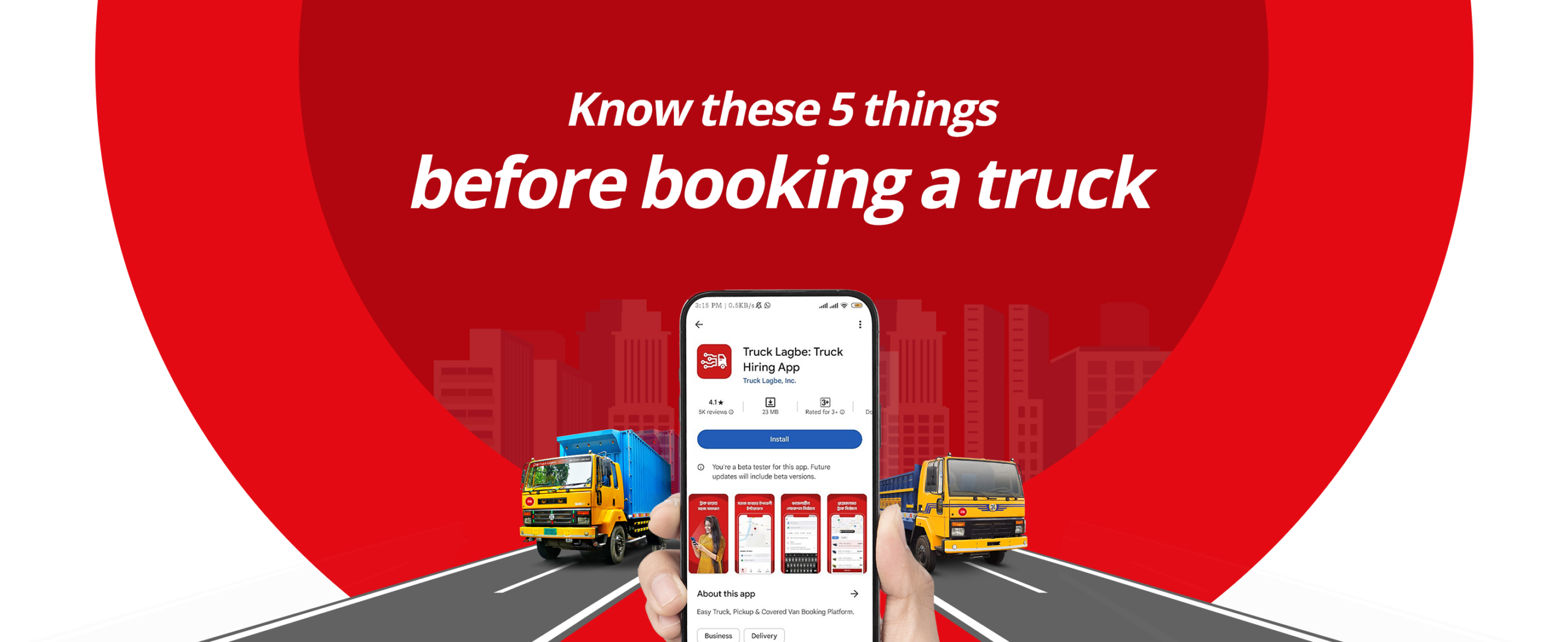
Look for a return load before the truck leaves. The Truck Lagbe Owner app shows trips posted by verified shippers across the country, so you can bid on a load from your drop-off district instead of returning empty or paying a middleman to find one. Registering takes your phone number, NID, driving licence and truck documents.
9. Plan around holidays and city hours
Trucks are kept off highways around the two Eids. In 2026, trucks, covered vans and lorries were barred from 17 to 23 March for Eid-ul-Fitr, as TBS reported, and on 25 to 27 and 29 to 31 May for Eid-ul-Azha, according to the Financial Express. Trucks carrying essentials, perishables, garments, medicine, fertiliser and fuel were exempt.
Demand peaks just before these bans, so plan maintenance and driver leave for the closed days. Inside Dhaka, trucks longer than 12 ft can only be booked on Truck Lagbe for city trips after 10:00 PM, which limits how many city trips a large truck can do in a day.
10. Keep business money separate and plan finance
Open a business bank account and deposit trip income regularly. A clean account history helps when you need a loan: LankaBangla Finance, for example, lists bank statements as mandatory for its Durbar commercial vehicle loan, which finances up to 80% of a used truck and 90% of a new one over up to 60 months.
Small businesses can also borrow at up to 7% through Bangladesh Bank’s CMSME refinance scheme at participating banks, according to UNB. Loans above Tk 20 lakh need proof of a filed tax return. Our guide on opening a business bank account covers the documents and tax rules.
Track every cost by truck: fuel, tolls, repairs, wages and informal collections. Informal payments remain a real cost on some routes; in August 2026, fruit trucks at Dhaka’s Badamtoli market were paying Tk 2,000 to Tk 5,000 each, the Dhaka Tribune reported. Knowing your cost per trip shows which routes and clients make money.
Bonus: insure the truck and the cargo
Third-party motor insurance has been optional since December 2020. In 2025, the Insurance Development and Regulatory Authority relaunched an optional motor liability policy that costs about Tk 3,651 a year for a 3-ton truck, TBS reported in February 2026. The trust fund pays accident victims, not owners, so it does not cover damage to your truck.
Comprehensive cover protects the truck itself against accidents and theft. Truck Lagbe signed a deal with Green Delta Insurance in 2024 to offer comprehensive motor insurance to trucks on its platform, as TBS reported. For valuable loads, shippers can buy inland transit cover for the goods.
Grow your trucking business with Truck Lagbe
Truck Lagbe connects truck owners with shippers across Bangladesh. Register on the Truck Lagbe Owner app to bid on trips and return loads, and if you serve businesses with regular shipments, see Truck Lagbe for Business.
Frequently asked questions
Is the trucking business profitable in Bangladesh?
It can be, if trucks stay loaded in both directions and costs are controlled. Fuel, empty return trips, breakdowns and fines are what erode profit, so pricing for diesel and finding return loads matter most.
What documents does a truck need in Bangladesh?
A registration certificate, fitness certificate, tax token, route permit where required, and a driver with a valid professional licence in the right category. Owners also pay an annual contribution to the accident trust fund.
How much does a new truck cost?
Prices depend on the brand, size and body. Ask several dealers for a quote, and remember to budget for registration, body building and insurance on top of the vehicle price.
How do I find regular trips for my truck?
Register on a digital platform such as the Truck Lagbe Owner app, build relationships with regular shippers, and look for return loads from the districts you deliver to.
Is truck insurance mandatory in Bangladesh?
No. Third-party insurance has been optional since December 2020, but owners must pay the annual trust fund contribution. Comprehensive insurance is optional and protects the truck itself.
How long can a truck stay on the road?
The economic lifespan for trucks and covered vans is 25 years. Transport owners have asked for 30 years, but no change had been confirmed by October 2026.