

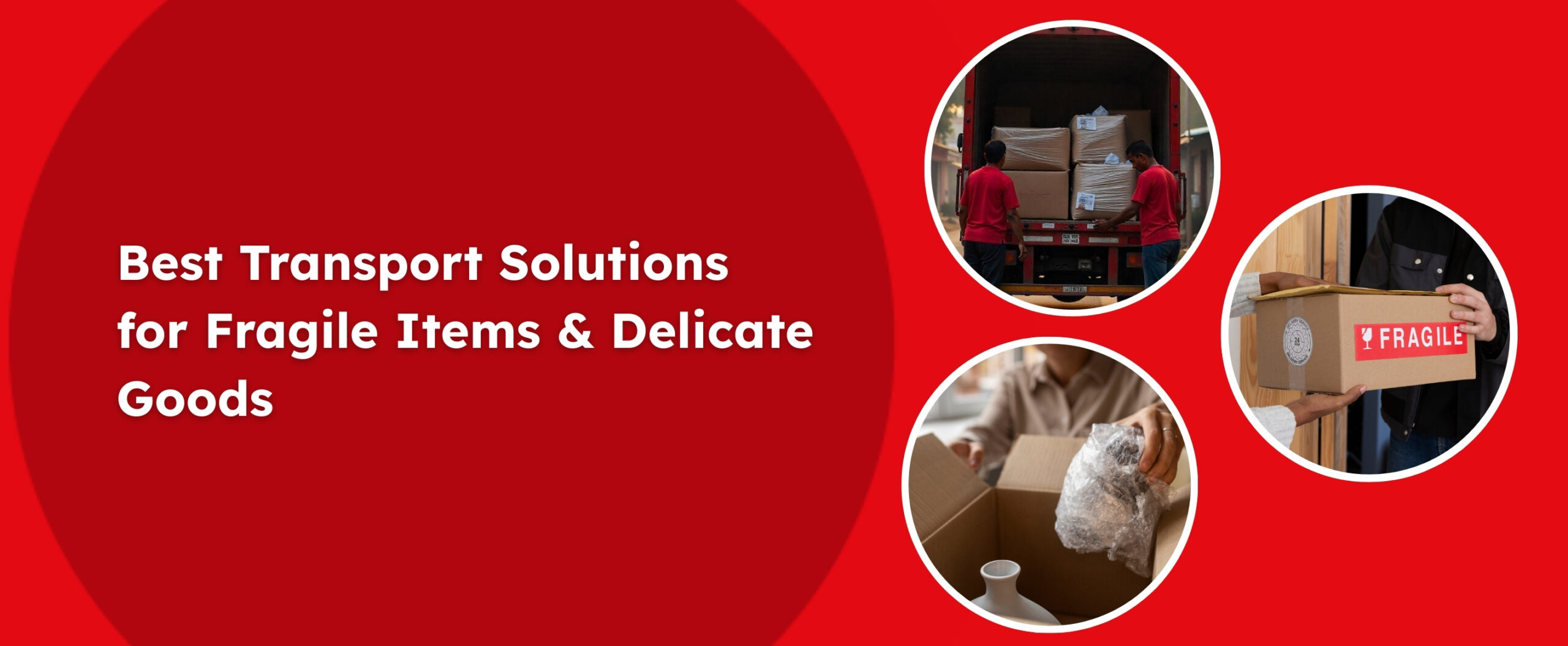
The safest way to transport fragile goods in Bangladesh is in a covered van or covered pickup sized for the load, with every item packed individually, gaps filled, the load strapped down and a driver who has been told the goods are fragile. Glass, ceramics, electronics, mirrors and furniture with glass parts break mainly from movement and shocks inside the truck, not from the journey itself, so packing and loading matter as much as the vehicle. For valuable goods, declare their value to the transporter in writing and buy transit insurance, because most truck owners and platforms do not insure cargo.
This guide covers which vehicle suits each type of fragile goods, how to pack and load them, how to choose a transporter and what to do if something arrives broken.
What counts as fragile or delicate goods?
Fragile goods break, crack, dent or stop working when dropped, crushed, shaken or wetted. Each type has its own main risk and its own best protection.
| Goods | Main risk | Best vehicle | Key packing step |
|---|---|---|---|
| Glassware, crockery, ceramics | Breaking from knocks and vibration | Covered pickup or covered van | Wrap each piece; fill every gap |
| Glass sheets, mirrors, glass tabletops | Cracking under pressure or flexing | Covered van with the glass standing on edge | Corner guards; strap upright against a side wall |
| TVs, computers, appliances | Shock and moisture | Covered van | Original box or thick foam; keep upright |
| Tiles, sanitary ware | Weight and chipping | Open or covered truck, sized by weight | Stack flat on pallets; no loose pieces |
| Furniture with glass or polish | Scratches, broken glass, loose joints | Covered van | Remove glass and legs; blanket wrap |
| Artwork, musical instruments | Scratches, humidity | Covered van | Hard case or crate; keep dry |
| Medicines, lab equipment | Heat and shock | Covered van; refrigerated if the label requires it | Insulated packs; temperature log |
Choose the right vehicle
Covered or open
For almost all fragile goods, choose a covered body. Bangladesh’s rainy season runs roughly from June to October, and even outside it, dust, sun and theft are real risks in an open truck. A covered van also stops goods from sliding off the side. On Truck Lagbe’s Dhaka chart, a covered van usually costs only Tk 300 to Tk 500 more than an open truck of the same size, which is far less than one broken TV. Open trucks are fine for tiles, sanitary ware and other goods that are heavy rather than delicate, as long as they are covered with a tarpaulin.
The right size
Choose by weight first, then space. A truck that is too small forces items to be stacked too high, and one that is far too big leaves room for goods to slide. For a few items, a covered pickup or a mini truck is usually enough; for a shop’s stock or a full flat, a 14 ft or 16 ft covered van.
| Vehicle | Payload | Dhaka fare range, open (Tk) |
|---|---|---|
| 1 ton, 9 ft pickup | About 1 ton | 800 to 2,200 |
| 2 ton, 12 ft truck | 2 tons | 1,200 to 2,700 |
| 3.5 ton, 14 ft truck or covered van | 3.5 tons | 1,500 to 2,800 |
| 7.5 ton, 16 ft truck or covered van | 7.5 tons | 2,500 to 4,500 |
Fares are from Truck Lagbe’s Dhaka fare chart, set before diesel rose to Tk 135 a litre, so expect bids near the top of each range. Covered vans cost more at the top of each range.
Special vehicles
Most trucks in Bangladesh ride on leaf springs, which pass road shocks straight to the load, so cushioning has to come from packing. For goods that need a controlled temperature, such as some medicines, vaccines or chemicals, you need a refrigerated vehicle. Cold-chain capacity is still short. USTDA says Bangladesh’s 2.7 million tonnes of cold storage across more than 300 sites cannot meet demand (USTDA), so book refrigerated transport well ahead. Heavy machines and transformers go on a low-bed trailer with proper lashing points.
Covered vans and other truck bodies suit different goods, and matching the body to the cargo is the first step in avoiding damage.
Pack fragile items properly
Good packing does most of the work. The aim is that nothing inside a box can move, and no box can move inside the truck.
- Use strong boxes. Choose double-wall cartons for heavy or fragile items, and do not reuse soft or damp boxes. Keep heavy items in small boxes so they can be lifted safely.
- Wrap every item separately. Use bubble wrap, foam sheets or several layers of paper. Wrap glasses and cups one by one, and stuff paper inside them.
- Stand plates and glass on edge. Plates, picture frames and glass panels survive far better on edge than lying flat.
- Fill every gap. Fill empty space with crumpled paper, foam or cloth until nothing moves when you shake the box gently.
- Pad the top and bottom. Put a layer of cushioning in the bottom of the box before packing and another on top before sealing.
- Protect corners. Use cardboard or foam corner guards on mirrors, glass tabletops, TVs and framed pictures.
- Take apart what you can. Remove glass shelves, table legs, lampshades and bulbs, and pack them separately. Tape screws in a bag to the item they belong to.
- Keep electronics in their original boxes where you still have them, and keep them upright. Take out discs, remove batteries where possible and photograph the cables before you unplug them.
- Label clearly. Write FRAGILE and THIS SIDE UP on at least two sides of every box, and number the boxes so you can check them off at the other end.
- Take photos of valuable items before packing, so you can show their condition if you need to make a claim.
For a home move, many of the same rules apply to packing for a house move, including the essentials bag and the box inventory.
Load and secure the goods
How the truck is loaded decides whether well-packed goods arrive whole.
- Heavy at the bottom, light on top. Put the heaviest boxes and furniture on the floor of the truck, and fragile boxes on top or in a layer of their own. Never put heavy boxes on top of fragile ones.
- Load towards the front. The area just behind the cabin moves least. Keep the most fragile items there, away from the tailgate.
- Stand glass upright. Glass sheets, mirrors and tabletops travel on edge, strapped against a side wall with padding behind them, never flat under other goods.
- Leave no gaps. Fill spaces between items with blankets, mattresses or soft furniture so the load cannot shift when the truck brakes.
- Strap it down. Tie the load to the truck’s sides with rope or ratchet straps, padding the straps where they touch furniture or boxes.
- Supervise the labourers. Tell the loaders which boxes are fragile before they start, and stay with them while they load.
On the road
Speed breakers, potholes and sudden braking cause most in-transit damage. Tell the driver the goods are fragile and ask him to slow down for speed breakers and rough patches. A driver who brakes early, keeps a steady speed, and takes bends gently the habits of careful truck driving protects the load as well as the truck.
Plan the timing too. Inside Dhaka, trucks longer than 12 ft can only be booked for city trips after 10:00 PM on Truck Lagbe, which also means quieter roads. Around the two Eids, trucks are kept off the highways for about a week, with exemptions for essentials, so book long-distance fragile shipments before or after those dates. For valuable loads on long routes, GPS tracking lets the owner see where the truck is and how fast it is being driven.
Choose a transporter you can trust
- Book a verified truck and owner. On a platform such as Truck Lagbe, owners register their trucks with documents. At a truck stand, check the registration, fitness certificate and the driver’s licence yourself.
- Describe the goods honestly. Say what the goods are, how many pieces and that they are fragile, so the owner sends the right truck and labourers. Most cases of booking the wrong truck come from vague descriptions.
- Agree everything in writing. Note the fare, loading time, labour, who is responsible for packing and the number of boxes.
- Declare high-value goods. Under the Carriers Act 1865, still in force in Bangladesh, a common carrier is not liable for loss of certain listed valuable goods worth more than Tk 100 unless the owner declared their value and description in advance. Declare valuable goods in writing when you book.
- Buy insurance for valuable loads. Truck Lagbe does not insure goods, according to its FAQ. General insurers offer inland transit cover. Eastland Insurance, for example, covers goods carried by truck and lorry under its marine cargo policies. For the truck itself, Green Delta and Truck Lagbe signed an agreement in 2024 to offer comprehensive motor insurance to trucks on the platform, TBS reported.
If you would rather not pack yourself, a shifting service whose team packs, carries and unloads takes on the handling for a household or office move.
For businesses that ship fragile goods regularly
Glass, ceramics, electronics and furniture companies ship fragile goods every week, so small improvements add up.
- Set a written packing standard for each product, with box type, cushioning and labelling.
- Use the same trusted owners or a corporate account, so drivers and labourers learn how your goods should be handled.
- Record every damage claim with the product, route, truck and cause. Patterns show whether the problem is packing, loading or a particular route.
- Use covered vans by default during the monsoon.
- For regular volumes, a corporate transport account with a dedicated manager and payment after the trip is simpler than booking each trip.
What to do if goods arrive damaged
- Check before the truck leaves. Count the boxes and open any that rattle or look crushed while the driver is still there.
- Photograph the damage and the packaging before you move anything.
- Note it on the delivery receipt or challan, and ask the driver to sign or acknowledge it.
- Tell the owner and the platform straight away. On Truck Lagbe, call customer care on +880 9638 000 245.
- Claim from your insurer quickly if the goods were insured, with the photos, invoice and delivery note.
Book a covered van on Truck Lagbe
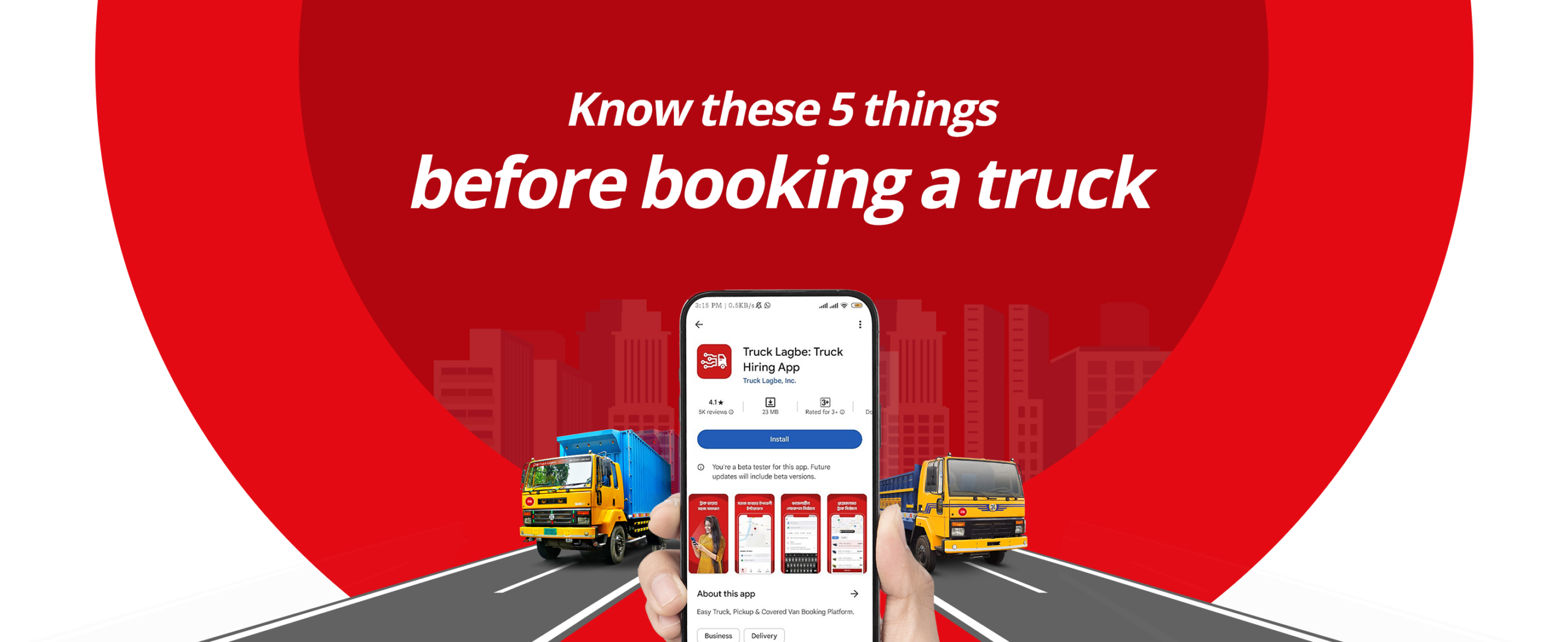
On the Truck Lagbe app, choose a covered pickup or covered van, describe your goods and mark them as fragile, and verified owners send bids. Download the Truck Lagbe app to book your next delivery.
Frequently asked questions
What type of transport is best for fragile goods?
A covered van or covered pickup sized for the load. It keeps goods dry and stops them sliding out, and the right size avoids high stacking or space.
How do I pack glass items for transport?
Wrap each piece separately, stand plates and glass on edge, fill every gap so nothing moves, and label the box FRAGILE and THIS SIDE UP on at least two sides.
Where should fragile items go in a truck?
On top of heavier goods or in their own layer, near the front behind the cabin, with no gaps around them and the load strapped down.
Are my goods insured when I hire a truck?
Usually not. Truck Lagbe does not insure goods. Buy inland transit insurance from a general insurer for valuable loads.
What should I do if my goods arrive broken?
Photograph the damage before unloading, note it on the delivery receipt, and tell the truck owner, the platform and your insurer straight away.